Drivers.com

follow us:

facebook twitter
  • Home
  • Download Drivers
  • Drivers Help
  • PC/Mac Resources
  • Software Drivers
  • Mac Fixes and Tips
  • PC Fix Tips
  • Security/ Backup
  • Tablets & Smartphones
  • Tech News
  • Software Drivers
  • Mac Fixes and Tips
  • PC Fix Tips
  • Security/ Backup
  • Tablets & Smartphones
  • Tech News

Resources by Tag

Update Drivers

Will Updating Device Drivers Improve Computer Performance?

Will Updating Device Drivers Improve Computer Performance?

Is your computer not working as fast as it used to? Is it hanging or even freezing when trying to complete certain tasks?

If so, perhaps it’s time for you to update your device drivers.

Old drivers can seriously impact the performance of your computer, and keeping your drivers up-to-date is a vital part of maintaining your device computer in tip-top shape.

It’s a common practice for computer users to defer updating drivers until a problem occurs and this can lead to serious issues with your computer. That’s because many driver updates e.g. driver updates for video drivers—often include performance updates. Not installing these updates mean the concerned device’s performance will be less than optimal.

What are Computer Drivers and why do I need to update them?

One question that many computer users ask is, Can updating drivers improve computer performance?

The answer is a resounding YES.

To understand why this is so, it is necessary to understand what drivers are and what they do.

An operating system and software cannot communicate with a piece of hardware on their own. They need a middleman, someone who can help them communicate with installed hardware. A device driver is this middleman.

Each piece of hardware has its own driver, which allows the operating system and other software to communicate with that driver.

Driver updates, among other things, fix bugs within the concerned software, including security tweaks, contain performance enhancements, and, most importantly, improve the communication between a hardware device and the operating system and other software.

Device drivers often get installed automatically whenever you plug in a new device, like a mouse or printer. This is perhaps the reason why computer users often don’t pay much attention to them. In instances when drivers are not automatically installed, the user must install them manually.

Different Driver Types

Broadly speaking, drivers can be divided in two categories.

  • Drivers for peripheral devices (e.g. printer drivers)
  • Drivers for hardware devices (e.g. graphics card drivers)

Drivers for hardware devices (think video card drivers, network drivers, sound drivers, etc.) make hardware installation easier, besides ensuring compatibility. However, some drivers (like those linked to top-of-the-line graphics cards that one commonly finds in gaming laptops) are periodically updated mainly to boost performance rather than simplify installation or ensure compatibility.

Peripheral device drivers power peripheral devices like external drives, cameras, music players, microphones, printers, etc. These drivers ensure that your computer and peripheral devices function together seamlessly by efficiently moving data to and fro between them.

When should I update my Drivers?

There is not one but two answers to this question. That is so because drivers too are of two types, as discussed in the previous section.

Drivers for hardware devices should be updated on a regular basis, which basically means whenever a new driver update is released. Doing so is crucial for your computer’s performance. This is especially true for video drivers because not installing the latest updates for them significantly impact your computer’s or laptop’s performance. If you are into gaming, this is one consideration you might not want to take lightly.

In contrast, drivers for peripheral devices do not impact your computer’s overall performance. That means it’s okay to update them only when you a problem or issue crops up.

Where Can I Find Drivers for my PC?

There are many places where you can find drivers. However, not all of these places are reputable. Downloading a driver from a dubious source could do more harm than good.

The first thing you should do if you are searching for a driver update online is to ensure that the source you have selected is trusted. Ideally, you should only use the manufacturer’s website or a reputable 3rd party vendor.

When it comes to driver updates, some of the primary sources are as follows:

  • Hardware or device’s manufacturer website. Generally, these websites include a driver download section. You can find drivers matching your operating system and hardware or software specifications here.
  • Because Windows uses far more drivers than Mac systems, it has a sizeable collection of various generic drivers. You can download generic drivers for devices and hardware from the Microsoft website.
  • The CD or DVD which was included with the device in question. Simply insert the disc in your computer’s CD or DVD drive to reload drivers.
  • Third-party vendors

Consider Automatic Driver Updates

Did you know that software tools can automatically update all the drivers on your computer in minutes?

These software tools scan your computer and automatically update all outdated drivers.

But there’s one important thing: Not all driver update tools are the same. Only a few are genuinely fast, accurate, and effective; others are either mediocre or simply a pain in the neck, hogging your computer resources and updating drivers at random.

If a fast, no-hassle computer experience is what you want, opt for a reliable driver update software tool. We recommend Driver Updater which is a trusted and monitored tool.

How to Update Drivers Manually

Want to update device drivers manually? If so, this section is just for you.

Windows computers include a utility called Device Manager, which lets you update device drivers, among other things.

We have shown you the steps to update the mouse driver, but these same steps can be used for updating drivers of other devices or hardware.

Here’s what you need to do to update a device driver manually using Device Manager.

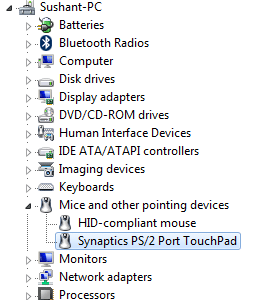
  • Click the Windows icon, type run in the Start Search box and press Enter
  • In the run dialog box, type devmgmt.msc and press Enter. This will open the Device Manager window
  • Expand Mice and other pointing devices
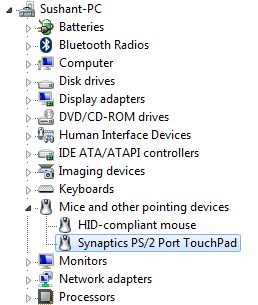
  • Select your mouse, right-click it, and click Update Driver Software
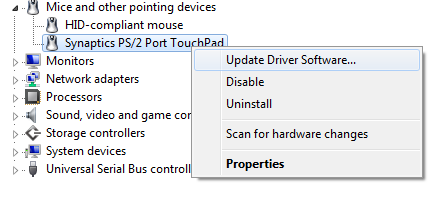
  • Select the first option that you see in the Update Driver Software dialog box
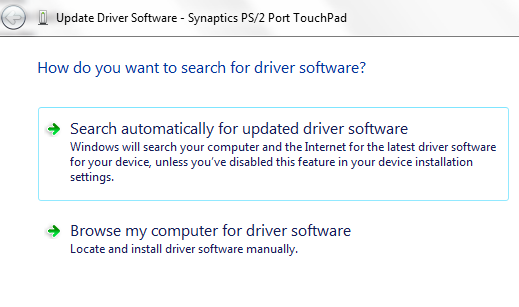
  • Wait for Windows to locate the driver and download and install it
  • If you are prompted to restart the computer after installation is complete, do so

Of course, you download the latest driver from the manufacturer website directly, without using Device Manager.

Just a word of caution: When downloading a driver from a manufacturer website or a third-party vendor, make sure the selected driver is compatible with your operating system. If you are using a Windows 10 32 bit system, select a driver that is designed for 32-bit systems. Likewise, those using a Windows 64-bit computer should choose drivers designed for 64-bit systems.

Updating Device Drivers Equals Better Performance

Coming back to the main question: Do out-of-date drivers impact performance?

Yes, they can. Outdated drivers can be have a big impact on your computer’s performance. They can also become a cause of more serious problems.

So, what is the easiest way to update device drivers?

The simplest and quickest way to update device drivers is by using a reliable and fast driver update tool.

With Driver Updater keeping your drivers up to date is very easy. With just a few clicks, you can update all your drivers. A free trial of this Driver Update Tool means you can give it a try without a worry.

Download using the link below and get your Driver problems fixed.
Start Download

Filed Under: PC Fix Tips Tagged With: Update Drivers

2 common fixes to Why is my Laptop battery not charging?

2 common fixes to Why is my Laptop battery not charging?

Last updated: January 18, 2024
Many people spend money unnecessarily replacing laptop batteries when they may have fixed the issue with a simple battery reset or a Drivers update. If you are having problems charging your laptop battery, then reading this post may save you a lot of time, money and frustration!

The very first thing to check if your laptop battery doesn’t appear to be charging is the actual physical cables. Firstly make sure the power outlet you are connecting to is not the issue. You can do this by plugging in something else. If this other device charges then the power outlet is not the issue.

Laptop battery not charging – check the cables

The second thing to check after the power outlet is the laptop cables. This can often be the issue where a cable is damaged, or more often, not seated correctly in the port. Check all cables and also check the cable for kinks or damage which may be causing power issue to you laptop.

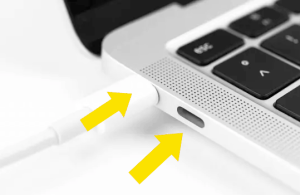
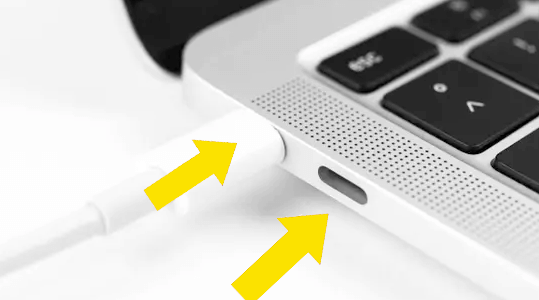
If you are on a newer laptop that charges via USB-C then make sure you are using the correct port.

You should also ensure you are using the correct cables, a USB-C charger for a phone for example may not have the wattage required to charge a laptop so use the cable that came with your laptop where possible.

usb-c charging port

Laptop battery not charging – overheating

If your laptop or power cable feel warm to the touch, plug out and leave for as long as it takes for everything to cool down. Then try charging again as your laptop may have become overheated, especially if left in direct sunlight.

Battery not charging – “0% available (Plugged In, Not Charging)”

With this error you may or may not see the charging light on your laptop, either way your laptop is having problems charging.

Batteries do have a finite lifespan (600-1000 charges/ discharges or about 2 years depending on intensity of use) and they can be very expensive to replace, so before throwing out that battery (in an environmentally-appropriate manner of course!), ensure that it has actually reached the end of its life and there isn’t some other problem preventing it from charging.

Plugging in not charging Dell laptops (Fixed)

Windows 10 laptop battery charging issue

Some updates in Windows 10 have been know to cause the laptop battery to stop charging. There is a simple solution to this:

  • go to Start > Device Manager
  • select Batteries > you will see
    Microsoft AC Adapter and
    Microsoft ACPI-Compliant Control Method Battery
  • Right-click on each individually > choose Uninstall device (they will reinstall when you restart your laptop but always run a backup first just in case!)
  • Turn laptop off and unplug the power cable
  • If your model has a removable battery, then remove it and then replace
  • plug laptop back in and power up
  • check to see if the battery is charging

Fix 1: Battery Reset

To reset your laptop battery you will need to run the battery down completely. Make sure all work is saved as you will run the battery down until the system shuts off. When this happens you should plug in the power cable but DO NOT turn back on the laptop. Wait until you are confident the battery is back to a full charge again and then turn on your laptop.

If this method does not fix your recharging issue then you can try to fix or update your laptop battery drivers by uninstalling and reinstalling them (make sure to create a ‘restore point’ in System Restore before manually updating Drivers files). You can use a Driver Update Tool to keep all your Drivers up-to-date if you prefer not to attempt this manually.

Fix 2: Update Drivers

You will need to uninstall and reinstall the relevant device drivers via the Device Manager.

– Select Start > (right-click) My Computer > Properties

– Select the Hardware tab

– Select the Device Manager Button

– Under Batteries right-click “Microsoft ACPI-Compliant Control Method Battery” and click Uninstall

Your battery should no longer be visible in the Batteries list. To reinstall it you will need to:

– Select Action menu

– Select Scan for hardware changes

– Your driver should be listed again

You can use a driver update tool to automatically update your Drivers if you are unsure of which ones you require. Driver errors can also occur when the Driver is outdated. For this reason it is necessary to regularly update your Drivers. The easiest way to do this is by using a Driver update tool but you could also search for and download the drivers yourself.

Automatic driver update tools offer many benefits, the most important ones being:

  • You can update device drivers automatically
  • The software scans and updates all outdated or missing drivers at one go
  • The tool picks the right drivers for your device and operating system, so you won’t have to worry about installing an incorrect driver by mistake
  • Automatic driver updates are 100% safe

Driver Updater is one of the best driver update tools out there. Outbyte Driver Updater will give you access to a database of over 1 million drivers. It will regularly scan your PC, suggesting new driver versions to install. Driver Updater contains drivers for a variety of Windows devices. With just one click, you can update drivers in your system.

Step 1
Click here to Install and launch the app

Step 2
Scan all devices

Step 3
Install or update drivers automatically


Start Download


Test your battery now and if there is still a problem charging, then it may have just reached the end of its’ days and it is time to part company!

Filed Under: PC Fix Tips Tagged With: battery charging laptop, dead battery, driver update tool, laptop battery, laptop drivers update, Update Drivers, windows device manager

Why Update Drivers and How to Make Updating Driver Easy

You might have read in a tech forum or been told by a techie to update your drivers at some point in time, but what does this really mean? What are drivers and why it is so important to keep them up-to-date?

What are Drivers?

A hardware device and Windows system and applications don’t speak the same language.

Or to be specific, there’s no way for Windows system and other applications on your computer to use a hardware device directly unless something helps them to do so.

And this is where drivers come into the picture.

Drivers are computer programs which allow Windows system and applications to interact with installed hardware device.

As you can guess by now, drivers are mighty important. Without them, you can’t do much on your PC. For instance, you can’t print anything if the printer drivers are missing, corrupt, or outdated.

When You Might Need to Update Drivers

There are many scenarios which might require you to update drivers.

  • A hardware device is not working properly

If a hardware device is not working at all or not working properly, you should consider updating drivers. For example, if your network card is behaving erratically and a latest driver is available for it, you should definitely consider updating the driver before attempting any other more complicated resolutions.

  • You need better features

When you plug in a hardware device for the first time, more often than not, Windows will install a generic version of the driver itself. There are things for which the generic version is fine and others for which it is seriously inadequate.

For example, generic sound drivers will never give you advanced features like room correction or virtual sound. To enjoy such features, you’d need to get the latest drivers released by the manufacturer.

Similarly, doing away with the generic video drivers and installing the latest drivers is almost necessary. Latest drivers will offer you a host of advanced options to allow you to personalize your graphic performance.

  • Improve Performance

In most cases updating a driver will not improve the device’s or PC’s performance notably—but there are exceptions. For instance, updating your video driver might boost your card’s performance significantly.

  • Security Alert

This is not common, but at times you might learn that a particular driver has some potential security concerns. In such a case, updating the driver would be the right thing to do.

How to Update Drivers?

Well, there are two ways to do this—manually or automatically.

Updating drivers manually can take a long time. And at times, you still mightn’t be able to locate the latest driver.

A better way is to use a driver software tool.

Updating Drivers Automatically

Automatic driver update tools offer many benefits, the most important ones being:

  • You can update device drivers automatically
  • The software scans and updates all outdated or missing drivers at one go
  • The tool picks the right drivers for your device and operating system, so you won’t have to worry about installing an incorrect driver by mistake
  • Automatic driver updates are 100% safe

Driver Updater is one of the best driver update tools out there. Outbyte Driver Updater will give you access to a database of over 1 million drivers. It will regularly scan your PC, suggesting new driver versions to install. Driver Updater contains drivers for a variety of Windows devices. With just one click, you can update drivers in your system.

Step 1
Click here to Install and launch the app

Step 2
Scan all devices

Step 3
Install or update drivers automatically


Start Download


Filed Under: PC Fix Tips Tagged With: Update Drivers

Things you must do when you download Drivers for your PC

Downloading drivers can be relatively straightforward, assuming the manufacturer still supplies the Driver you are looking for. However, you must follow certain steps in order to ensure that you download and install drivers correctly. When you download a driver, you must ensure the following:

  • The driver you select is compatible with your device and the operating system
  • The driver file is not malware
  • The proper installation protocol is followed

Before we discuss in detail what you must do when you download device drivers, let us first take a look at the different situations in which you may need to download a driver. You need to download PC drivers if:

  • You reformat Windows but don’t have the original drivers
  • You upgrade your hardware but didn’t install the latest drivers
  • You upgrade your Windows version but didn’t install the latest drivers
  • Your drivers are missing, outdated, or corrupt

Step-by-step instructions for downloading and installing the latest drivers

Step 1 – Note down the model number of your hardware device

Different versions of a hardware device require different drivers. Therefore, before you begin downloading, it is important that you are aware of the model number of your hardware device. This information is printed on your hardware device. If this is not the case, or for internal hardware devices, you can get this information from the Device Manager window.

Open the Device Manager utility via Control Panel, double-click on your hardware device, and then click the Details tab. You will find this information under this tab.

Step 2 – Go to the manufacturer’s website

Next, go to the manufacturer’s website, locate the relevant driver, and click the Download button. Save the downloaded driver file in a suitable location.

If you are downloading drivers manually and they are not listed on the manufacturer’s website, you will need to find the Drivers elsewhere. A driver update tool can do this for you, you can also run a free scan to identify the exact Drivers you need.

Step 3 – Scan the downloaded driver file for malware

This step is absolutely necessary if you download a driver from a website other than the manufacturer’s website. If you have downloaded the driver from the manufacturer’s website or are using a Driver Update Tool, you can skip this step.

Step 4 – Create a restore point before installing the driver

Sometimes, you may encounter an issue after completing a software installation. To prevent any unforeseen problems, we recommend you create a restore point before installing a driver or, for that matter, any other software. If you do not know how to create a restore point, you can look up this information in the built-in Windows Help Guide. If you are using a Driver Update Tool, a restore point will be created automatically.

Step 5 – Install the driver

After you complete the aforementioned steps, click the downloaded driver file and follow on-screen instructions to install the required driver. Upon completion of the new installation, you may be prompted to reboot Windows.

Why you should consider using a Driver Update Tool

Installing one or two new drivers from the manufacturer’s website may not demand a lot of time or effort. However, what if you need to download ten or more drivers or the drivers you need are not there on the manufacturer’s website? Then it can be very frustrating and time-consuming. We recommend downloading a driver update tool, to update all your corrupt, outdated, and missing drivers in minutes. You can use the free scan to find the Drivers you need and either search for them yourself or register the software to let it do the updates for you.

Updating Drivers Automatically

Automatic driver update tools offer many benefits, the most important ones being:

  • You can update device drivers automatically
  • The software scans and updates all outdated or missing drivers at one go
  • The tool picks the right drivers for your device and operating system, so you won’t have to worry about installing an incorrect driver by mistake
  • Automatic driver updates are 100% safe

Driver Updater is one of the best driver update tools out there. Outbyte Driver Updater will give you access to a database of over 1 million drivers. It will regularly scan your PC, suggesting new driver versions to install. Driver Updater contains drivers for a variety of Windows devices. With just one click, you can update drivers in your system.

Step 1
Click here to Install and launch the app

Step 2
Scan all devices

Step 3
Install or update drivers automatically


Start Download


Filed Under: Software Drivers Tagged With: anti-spyware, anti-virus software, download drivers, driver update tool, driver updates, fix drivers, speed up pc, Update Drivers

Two Most Common Windows Drivers Error Codes And How To Fix Them

Device Manager is a built-in utility in Windows that lists relevant information about the hardware devices installed on a computer. If there’s a problem with a hardware device, the Device Manager window provides useful insight into what may be the cause of the problem and how to go about fixing it.

When there is something wrong with a hardware device, an error code is generated in its Properties dialog box, which can be accessed via Device Manager. Different error codes denote different things and, as such, each may have a different resolution.

Before looking at the top two Windows drivers error codes, let us learn how to see the generated error code in case a hardware device is not working properly.

How to view an error code:

To view an error code, perform the following steps:

  1. Open Device Manager
  2. Locate the hardware device that has encountered a problem. An exclamation point, a question mark, or a yellow mark against a device indicates that it has a problem
  3. Double-click the device that is not working
  4. Note the error code that appears in the Device Status box under the General tab

The two most common Windows Drivers Error Codes are: Error Code 1 and Error Code 3

Code 1: The error message, its cause, and how to resolve it

Error message
The following error message appears: This device is not configured correctly. (Code 1)
Its cause
The aforementioned code occurs when any of the following is true:

  • Drivers for this device are not installed on your computer
  • Drivers installed are not properly configured

How to resolve
Solution 1: If you have the required driver on your computer, install it via Device Manager. To do this, perform the following steps:

  1. Open Device Manager
  2. Open the Properties dialog box of the hardware device that has encountered an issue
  3. Click the Driver tab
  4. Click the Install button, and follow the onscreen instructions
  5. Restart Windows if you are asked to do so

Solution 2: If you don’t have the required driver on your computer, download the driver from its manufacturer’s website and install it. Alternatively, you can also run a free driver scan on your computer using our driver update tool, this software will automatically update all your outdated, missing, or corrupt drivers.

Code 3: The error message, its’ cause, and how to resolve it

Error Message
The driver for this device may be corrupted, or your system may be running low on memory or other resources. (Code 3)
Its cause:
The aforementioned code occurs when any of the following is true:

  • Your computer has insufficient memory to run the device
  • Your device driver is corrupt

How to resolve:
Solution 1: Close a few running programs, and then try to run the device
Solution 2: Uninstall and re-install the device driver. You should do this through Device Manager. To do so, perform the following steps:

  1. Open Device Manager
  2. Open the Properties dialog box of the hardware device that has encountered an issue
  3. Click the Driver tab
  4. Click the Uninstall button, and follow the onscreen instructions
  5. Restart Windows
  6. Open Device Manager again, and then open the Properties dialog box of the hardware device, and click the Driver tab
  7. Click Install, and follow the onscreen instructions
  8. Restart Windows

Solution 3: Download the driver from the manufacturer’s official website and install it.

Solution 4: Download Driver Update Tool to automate your Driver Updates

If you know the device that is causing the driver errors, you can try to download updated drivers from the manufacturers website. If these drivers are not available or you do not feel comfortable updating them, you can download a driver update tool.

If you are unsure of the driver you need, then you can use a driver update tool to run a free scan of your PC and identify the problem Drivers(s).

Filed Under: Software Drivers Tagged With: device manager error code, download drivers, fix error codes, speed up pc, Update Drivers

5 Top Driver Update Tools

Drivers problems can manifest themselves in any number of ways. Most often users will experience a slowdown in their PC or even frequent ‘freezing’ and ‘crashing’ of PC and devices. Problems with audio or sound drivers, printer drivers and bluetooth drivers are among the most common.

Among the manufacturers, most of our queries relate to missing HP drivers or problems with Lexmark printer Drivers. We always recommend users check the manufacturers website first for new Drivers releases. However, in many cases the Drivers may be no longer available or just very difficult to find or install.

Windows Drivers Download & Updates

If you have spent fruitless hours looking for Driver updates for your PC or device, then your best option is probably to use a Driver Update Tool. These tools are mostly free to try, this means they will allow you to run a free Drivers scan to establish the particular Drivers that are causing you problems. If you wish to download these Drivers (and get ongoing automatic Driver updates), then you will need to register the software. The costs vary but are usually just under $30 per year, so not a huge cost for the amount of time it may save you.

To make your choice easier, we have put together a list of recommended driver update tools.

Feel free to offer your insights using the comments box below.

Filed Under: Software Drivers Tagged With: computer errors, driver update software, driver update tool, fix drivers, Slow PC, speed up pc, top driver update tools, Update Drivers, update printer drivers

How do I update Drivers / fix Driver errors?

Drivers need to be updated regularly in order to keep your PC running at its best. If you have not updated your drivers in some time then you are probably experiencing some of the following:

– slower PC
– problems with peripheral devices (such as printers etc.)
– periodic crashes or programs freezing

Every PC will contain numerous Drivers for the various devices associated with it (printers, bluetooth etc.). Some of these Drivers may be out-of-date or have even become corrupt over time.

To update Drivers you can go directly to the manufacturers website and look for any new releases (keep an eye on our blog as we will list new releases under ‘Drivers News’). However, this can be a time-consuming and complicated process which is why most people choose to download a Driver Update Tool to automate this process for them.

To get a Driver Update Tool to update your Drivers for you, you need to

1. Download and install the Driver Update Tool
2. Run a scan of your PC Drivers (this scan is free)
3. Register the software and let it do all the work!

Filed Under: Software Drivers Tagged With: fix driver errors, fix drivers, fix slow computer, Slow PC, speed up pc, Update Drivers

No Internet Connection on my laptop on WiFi Network

There are few things more frustrating than starting up your Laptop to discover that  you cannot connect to the internet or even send an email.

There are a variety of things that can cause internet connection problems with WiFi,  to try to save you time and effort we will start with the simplest first.

In this post we are looking at connectivity problems with Laptops and Wifi, but many of the issues mentioned will be common for other Computers and types of connection.

The first thing to do is to work through a checklist and rule out the simplest and most obvious problems.

What do you need for a Wifi connection to work properly on your Laptop?

  1. Broadband/ Internet connection
  2. Wireless Router
  3. Wireless-enabled laptop

1. Broadband/ Internet connection

Check that your broadband/ Internet connection is working – unpaid bills are a common cause of WiFi connection problems!

2. Wireless router

A WiFi connection needs a wireless router – check that this is working by ensuring that all relevant lights are on, switch off and on again in case this is the problem.

3. Wireless-enabled laptop

You need a wireless-enabled laptop (or PC) – if you have suddenly lost the ability to connect for no apparent reason, most likely the cause is that the Wireless switch has been turned off (this often happens accidentally). On some laptops this is a small slider switch on the front of your laptop and on others it is on a function key (check for the wireless ‘tower’ image).

If you are still having WiFi connection problems on your laptop, having checked all the above, then you should ensure that your Wireless Drivers are up-to-date. Driver update tools

Filed Under: Software Drivers Tagged With: computer errors, fix drivers, laptop drivers, laptop internet connection, network, no internet connection, Update Drivers, wifi drivers, wireless drivers

Fix Windows Drivers: Device Manager Error Codes

computer_error-300x175What is Windows Device Manager?

The Windows Device Manager is a program built-in to Microsoft Windows operating systems which enables a user to monitor and edit hardware associated to the computer (such as printers, audio devices etc.). When there is a problem with one of your hardware devices, the Device Manager will highlight this and allow you to view more detail on the issue.

This detail often comes in the form of error codes and associated error messages. These errors appear when there are Driver or other hardware problems on your PC. Device Manager error codes can tell you a lot about the problems your PC is experiencing, but understanding what these errors mean can be another problem!

We have put together a list of all the Device Manager error codes (this refers solely to codes within Device Manager and not general system errors).

Windows Drivers Errors:

Code 1 –
Error Message: This device is not configured correctly. (Code 1)
Cause: The device cannot find the required drivers on your computer, or these drivers are corrupt or configured incorrectly.

Code 3 –
Error Message: The driver for this device might be corrupted, or your system may be running low on memory or other resources. (Code 3)
Cause: as the error message states

Code 10 –
Error Message: This device cannot start. (Code 10)
Cause: as the error message states

Code 12 –
Error Message: This device cannot find enough free resources that it can use. If you want to use this device, you will need to disable one of the other devices on this system. (Code 12)
Cause: This message can occur if two devices are conflicting with each other in some area (such as assigned ports) or if the BIOS has failed ot allocated sufficient resources to the device in question.

Code 14 – 
Error Message: This device cannot work properly until you restart your computer. (Code 14)
Cause: as the error message states, try a restart to fix the problem

Code 16 –
Error Message: Windows cannot identify all the resources this device uses. (Code 16)
Cause: The device is not fully configured

Code 18 – 
Error Message: Reinstall the drivers for this device. (Code 18)
Cause: as the error message states

Code 19 –
Error Message: Windows cannot start this hardware device because its configuration information (in the registry) is incomplete or damaged. To fix this problem you should uninstall and then reinstall the hardware device. (Code 19)
Cause: as the error message states

Code 21 – 
Error Message: Windows is removing this device. (Code 21)
Cause: as the error message states

Code 22 – 
Error Message: This device is disabled. (Code 22)
Cause: as the error message states

For information on Code 32 errors, see our article: Device Manager Error Code 32 – what is it and how do I fix it?

Filed Under: Software Drivers Tagged With: driver error codes, fix drivers, Update Drivers, windows device manager, windows registry errors

Will cleaning my Windows Registry speed up my PC?

In short – yes! But first we should explain what the Registry is and why a badly maintained one can have a detrimental effect on your computers’ speed.

Three reasons why you must clean Windows registry

What is Windows Registry?

The Windows Registry is a database which stores vital settings and details relating to your Windows Operating System. It contains a range of information, from where programs are stored to settings for connected hardware devices.

The Windows Registry is like the central nervous system of your computer so caution is advised when making any changes to it. Unless you are an advanced user, you should only update the Windows registry using a recognised update tool.

How can you boost PC speed before downloading? Check for PC issues causing slowdown and try out special tools to improve PC speed.What causes Windows Registry problems?

Most of the time Registry problems arise as a result of program installation or removal. When you add or remove software, details and settings relating to this software are edited in the Registry.  Installing or uninstalling programs, working with old drivers, or even unwittingly downloading spyware, can result in Windows Registry errors.

What are the signs of Registry problems?

The most common signs of Registry problems are slow computer speed, computer crashes or programs freezing or behaving erratically.

How do I fix my Windows Registry?

Unless you are a very advanced and equally brave PC-user, you should use a third party software tool to attempt any Registry repair. There are a number of Registry Cleaner Tools on the market, you just need to ensure the one you select will allow you to create Registry backups and then clean and repair the Registry itself.

Filed Under: PC Fix Tips Tagged With: clean registry, clean up my PC, computer errors, fix drivers, Slow PC, speed up pc, Update Drivers, Windows Registry, windows registry errors

  • 1
  • 2
  • Next Page »


  • Recent Posts
  • Popular Posts
        

Read More Posts


Read More Posts

Drivers.com Sites

  • Software Drivers
  • Drivers Ed

About Us

  • Advertise
  • About Drivers
  • Drivers Support
  • Drivers.com Privacy Policy
  • Disclaimer
  • Software Drivers
  • Mac Fixes and Tips
  • PC Fix Tips
  • Security/ Backup
  • Tablets & Smartphones
  • Tech News

© Copyright 2026 PDE Publications Ltd. End User License Agreement (EULA)