I would like to share my experience as it is still haunting me after one week. I'm a college student and after pulling an all-nighter (about 25 hours no sleep) I had a very close call that I might of ended up dead. My college is in a semi-rural area so I drive on divided highways mostly. I did not even realize myself dozing off so as much as when you blink your eye. I was going 75-80 mph and almost rear ended the car in front where I switched lanes no less than a fraction of a second and grateful no one was beside. My car almost spun out of control. I exited just a few moments later and stopped at a gas station to thank God nothing happened. Please, to all students out there I know we are all on academic mission and go through a lot to make a grade but take care of yourselves while on the road. After sleep-deprived days, take a short nap before driving or use the caffeine if you need it.
Falling asleep at the wheel
By: Jack Nerad for Driving Today
Date: Tuesday, 18. July 2006
Are you getting enough sleep? Apparently a lot of people aren't, and the result is dangerous. The U.S. National Highway Traffic Safety Administration (NHTSA) estimates that approximately 100,000 police-reported crashes annually involve drowsiness and/or fatigue as a principal causal factor. Those crashes result in an estimated 1,500 fatalities and 71,000 injuries each year, and an annual monetary loss of approximately $12.5 billion.
It is amazing the carnage isn't worse, considering a recent survey by Farmers Insurance. More than 10 percent of drivers admit to having fallen asleep at the wheel, while more than 20 percent say they have momentarily dozed while driving, according to the study of 1,024 drivers.
Referred to as "the silent killer" because it is so often overlooked as the cause of an accident, drowsy driving's full effect is not yet known because reporting is imprecise, police are not trained to detect sleep-related crashes and there is no Breathalyzer-like test to determine whether someone was driving while dangerously drowsy.
"Driving while drowsy or fatigued is something that most drivers have experienced or will experience at some point," said Greg Ciezadlo, vice president, Farmers Insurance, yawning. "We need to raise the awareness of this problem and educate drivers on how to prevent it from happening."
According to the Farmers survey, almost three times as many men (15.9 percent) as women (5.8 percent) said they had fallen asleep while driving. Those ages 55 to 64 had the highest percentage of any age group surveyed (13.7 percent).
Nearly twice as many (20.6 percent) of those surveyed said they had momentarily dozed while driving, including 28.6 percent of the male respondents. In addition, while 53.4 percent of all surveyed said they have felt drowsy while driving, 41.2 percent claimed they kept driving. (Hey, "good" idea.)
Tactics to fight drowsiness
Now a new survey shows some of the tactics drivers resort to in an effort to fight drowsiness on the road. In descending order, the most popular tactics those surveyed said they have used when they have become sleepy while they were driving were:
- Stop driving or switching drivers (59.5 percent)
- Open the windows or turn on the air conditioning (59.0 percent)
- Listen to the radio or CDs (57.7 percent)
- Stop to eat or drink (46.3 percent)
- Drink caffeine (42.3 percent)
Other methods the respondents claimed to have used to stay awake at the wheel include talking or singing to themselves (31.7 percent), splashing water in their faces (18.4 percent) and slapping, hitting, or pinching themselves (a self-abusive 16.1 percent).
The American Institute of Chartered Personal Casualty Underwriters (which is one heckuva name for a band) insists "stay awake" behaviors such as exercising, turning on the radio, and opening the windows are misconceptions and have not been proven to prevent sleep attacks. Other unproven methods to combat drowsiness are hopping on one foot, swapping pants with another occupant of the car, and trying to remember the name of good Rob Schneider movies.
Experts who have looked at the problem say the only safe way to combat drowsy driving is to pull over to a safe parking spot and take a 20-minute nap. Then drive to the closest safe resting spot--such as a motel, friend's house, or the meadow where Bambi frolicked with Thumper--and sleep.
"With 'drowsy driving' on the increase," Ciezadlo said, "it is increasingly important drivers do all they can to prevent this problem, including getting sufficient sleep and avoiding alcohol."
You are getting sleepy
To deal with this deadly problem, Ford Motor Company has announced findings from a comprehensive five-month study, resulting in new technology designed to keep drowsy drivers awake.
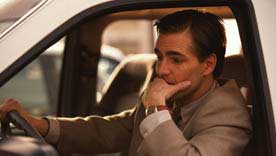 The study is the most complete controlled laboratory research ever conducted on the difficult problem of drowsiness behind the wheel. Subjects were required to stay up all night and were not allowed to drink caffeine after 6 pm the night before the study took place. The sleep-deprived drivers were then sent on a three-hour drive--not behind the wheel of a car--but behind the wheel of Ford's state-of-the-art, extremely realistic VIRTTEX driver simulator--a smart move since the simulator can't roll over.
The researchers found that so many drivers veered off the virtual track during the test that there would have been numerous serious accidents had they actually been on the road. A drowsy driver moving at 70 miles-per-hour will travel nearly the length of a football field if he or she falls asleep for even two and a half seconds, and most people sleep a lot longer than that every night.
As the drowsy subjects drove the simulator, researchers experimented with several methods of keeping them alert, such as the use of various lights and sounds. Ford expects to use what it learned from the study in new technology to be introduced into its cars, beginning with its Volvo brand probably because Volvo drivers expect such safeguards given the marque's long involvement in safety issues.
According to the National Sleep Foundation's 2002 "Sleep in America" poll, about one-half of adult drivers (about 100 million people) say they've driven a vehicle in the past year while feeling drowsy. Almost two in 10 people (about 32 million) have actually fallen asleep at the wheel. One percent (approximately two million drivers) had an accident because they dozed off or were too tired to drive. One half of one percent was too tired to even finish the survey.
Further comments to this article have been disabled.
All Comments (133)
Showing 1 - 133 comments
 J,
J,
lil b,
my older brother only 4 years older than me, hes 24 nd im 20, heapperantly fell asleep at the wheel and fell into a ditch and hit a buch of trees on the side, it was on the highway,he has a difuse axonal injury and they say he will never be the same, his outlook is very poor but were trying to stay positive, i love you bro, its just not fair how this happens, so people please be careful out there, glad to hear all these stories where people didnt get severe injuries, never thought this would happen
Emily Jane,
Yesterday while stopped at a busy intersection waiting for a red light, I was hit from behind by a 32 year old lady who said she fell asleep at the wheel. Fortunately she wasn't going very fast; lots of damage to the car, but at least no one was hurt.
Scarry though to think that lots of people are sitting behind the wheel while sleepy. I wish more attention would be given to this issue.
Jeremy,
Same as mb I drove home after a pulling an all nighter in the office with my wife and baby girl in the car, I was so sleepy but since home was only a few kilometres away i thought I could stay awake. Suddenly whilst driving I heard my wife shouting and I opened my eyes to see an oncoming car as I had veered onto the wrong lane. I straight away turned and narrowly missed an accident. My wife is pissed and I don't blame her as I am very angry with myself in putting my family in danger. Thank God nothing happened but in the back of my mind I can only think of "What if" and that's a scary thought...
mb,
I just almost killed my family this afternoon. I fell asleep while driving home from an outing with my son and wife. I've been putting in multiple shifts at work and other things.
No excuse, I drifted off the freeway my wife screamed and I woke up. Didn't over correct and flip our CRV.
My son is 4 and has no idea how close he came to dying today and my wife is understandibly pissed.
I honestly wish it'd just been me in the car.
Katelin Walton,
My brother was standing at his bus stop when a car hit him. The driver claimed to have been asleep. In police statements, the driver ran into a ditch, drove out of it, traveled to where it hit my brother and hit a ditch once again. Is this possible that he could have been awake?
catherine maulin,
also i am only 16 years old
cathrine maulin,
hi my name is Catherine Alexandrea Maulin my friends call me Catt and family calls me Alex one night i was driving home from work it was a normal day i woke up went to school had dance practice after school then straight off to work i get off about 930 10 o clock it was cold but i was nice and warm and driving home down 288 its a 20 minute drive maybe 30 i was not even 5 minutes from my exit when i felt a jerking of my truck and was thrown from the drivers to the passenger side of the truck i couldnt open my eyes until i was completely over the other side of 288 i pushed my self off the wall and garbed the wheel turning twice then tried once more to push again and finally hit the break and ended on the feeder almost in the ditch and that was it i felt my life flash
Gina,
To Concerned Father...Be glad all it was that your son got was a ticket! My son fell asleep at the wheel in January of this year, hit a panel truck and then got hit by an SUV and Died and at the scene. To put it mildly...it sucks. What ever the case, or excuse your son gives you, be glad he's still alive!!! Tell him you love you him and next time to call at anytime if he needs to stay awake when driving. From a Mom who lost a special son at 22. Enjoy your Holidays.
Jenelle,
and for @concerned father: It is very well a plausible reason . Well i fell asleep my foot got heavy weighing on the gas pedal . this caused me accelerate to 50 mph into the other car . this is what i was told by authorities. i believe your son is telling the truth .
Jenelle,
I am a Pre-med Major at SDSU, im 19 and on monday night i feel asleep behind the wheel because of pulling all nighters for midterms. Thank God i walked awaywith no severe injuries but I am traumatized now .. i totaled my car and two cars that i hit. I was 7 houses away from home. they were parked and no one was in the cars . This is a serious issue . I strongly recommend no matter how close you are to your destination , as soon as your head drops pull over !
Jenelle,
I am a Pre-med Major at SDSU, im 19 and on monday night i feel asleep behind the wheel because of pulling all nighters for midterms. Thank God i walked awaywith no severe injuries but I am traumatized now .. i totaled my car and two cars that i hit. I was 7 houses away from home. they were parked and no one was in the cars . This is a serious issue . I strongly recommend no matter how close you are to your destination , as soon as your head drops pull over !
concern father,
My son claims initially he was not speeding but car accelerated when he dosed off and thus he got the ticket. Is it possible my daughter who is a MED student supports his excuse but I don’t buy that. Any thought.
Elle,
And P.S. I work 12 hour rotating shifts in a fast pace environment. I have a 45 minute track to work and every other vehicle is a 18 wheeler going no slower than 55 mph. I have seen things that would even make the cops tear up. I don't think a car wrapped around a tree with backpacks and books scattered along the road is an accident..It's a TRAGEDY and a FELONY. And this could very well be your future if you want to hide behind apnea. Tough love Matt. Tough love.
Elle,
Oh Matt. You say you were charged with D.U.I?!?! You have no defense with the apnea. Nor should you! To me this is one and the same. I could never find pity for these offenses, just for the victims. It sounds like you are trying to flake out. What a shame. Face up to your mistakes and take the punishment. This is not about you. This is the safety of others who have no choice in the decisions you make. Grow up and think twice or buy a pair of running shoes. Apnea Matt!?!?!?!?
matt,
I have recently been charged with d.u.i,dangerous driving in alberta canada but recently its has been determined that i have sleep apnea can i use the sleep apnea in my defense?
Richards lyon,
I have found that drowsiness disappears instantly if one is faced with an anticipated problem. Thus , when drowsy, yet able to see the road ahead, a possible altercation ahead will result in instant awakeness. So, I an MD, see this more as a concentration problem, quickly reversible. Guess we need a "Jack in the box" on the hood for surprise.
c.miller,
The most horrifying morning time of my life.Without warning i fall asleep.I went across a 4 lane road went up the curb, on 2 the side walk i woke in time to miss two lamp post on each side of me. I wake up turn the wheel,back on the road to a car coming just miss it...what happen am i awake.unsure im driving down the road where am i. i go 2miles out of the way where i need to be.my life could have ended.i could have took some one life.I never saw this coming.im scared to drive without choice i must go to work .You say get enough sleep easier said the done.u think im kidding I just shaved my legs,it been almost 2years.please i know how wrong it is to drive while tried what do u do im a single mother my job an hour away.If i had a chance at getting some sleep i do it!
Justin,
Recently my brother fell asleep momentarily, and drifted into the on coming traffic, he woke up soon after ad swerved back into his lane. But he didn't know that a car, from the on coming traffic, swerved into my brothers lane to avoid him. They collided at the center line. Totaled both cars. Luckily only minor injuries for all the occupants. Now he's probably going to have a criminal background.
Alive,
When I was asleep a driver fell asleep and hit the tree in my front year. If the tree was not there the car would have gone through my living room, where i accidentally fell asleep. I could've died.
Kundan,
I'm amazed at the stupid advice on this page! If you are drowsy then STOP DRIVING! I know some will say "easier said than done," but the only safe & sensible thing to do is make sure you are well rested & well hydrated.
Nadgob S.,
Too bad this funny line is at the end. Some of the readers will be too tired to read it :)
loser123,
nah i dont wanna go to a giant mansion full with food and no siblings and inly my really great friend. Nah ill be fine - sacasim - your an idion wicked123
wikked 123,
just remember i used to live in holland too, any way do u wana come, the mansion a=has 2 HUGE pools and 3 spas and everthing else you could want but the maids are on holiday this christmas so its kinda a serve your self, wash ur own cloths thingy it sucks :( wabba come :)
loser123,
you are not going to holland without me K?
Its special and i dont think that you will be able to not crash it but ill take you on a ride i promise
wikked 123,
fine then i was gunna ask u to come to my holiday mansion thingy in spain next week but no maybey i will go to the netherlands to my other holiday home :)
loser123,
no its my jet pack and ill get my sisters body guard onto you and its not a teddy - i think
lol
wikked 123,
thats not vewryy nice i new the photographer he was called paul hehe :) he is a cool man ohh can i have a go on your jet pack tonight pretty please ???!!! ;D
loser123,
You are going to be sorry that you cut up your friendship bracelet when you become friends again, and you know you will. It always happens
loser123,
thety didnt tell you the password for a reason you pedofile
wikked 123,
i was in the pictures so it dont count!!!! u mad australia person
loser123,
well you just supposidly hacked into your mothers photo account and your telling me about things being weird???
You crazy englishmen
loser123,
a paediotrition is a kids doctor why?
wikked 123,
biance dont write deaath notes not verry nice tut tut :(
booooo,
HEYYYYYYY IVE GOT A DEATH NOTE
wikked123,
i am not going to kill u only if i can have a go on your jet pack xx :)
Loser123,
This is funny made me laugh i dont drive a car because im clever i use a jet pack.!!! How smart am i. By the way im only 14!!!
But i have my jet pack lisence and my lil sis has her doggie license.
By parents were dumb and drived. There now road kill, these people thought they were kangaroos dumb englishmen
LOL my friend is english and i bet she's gonna kill me. Maybe friends are more dangerous than driving.
Travis,
Fell asleep while driving cuz had to drive an hour and half away after staying up all night with friends. Fell asleep went into ditch then over corrected and hit guard rail did a 360 spin hit the other guard rail and drove away
c. kennie,
I have driven a car while in a disassotion (spelling) state. This state is when your mind shuts down because of stress overload and goes to "automatic pilot." During this period, which can last for several hours, you have no idea what is happening to you. I went from 9:am to 3:pm and sometime during this time period, I had no idea what went on, except that I had driven 165 miles while on ":automatic pilot."
I have never had a driver's license and my eyesight would prohibit me driving, as would my untreated sleep apnea. How many more of us are on the road???Scared...you should be.
If you see ant type of odd behaviour in a driver, they are safer ahead of you, than behind. Keep safe and drive like everyone on the road is out to get you. Subconsciously, they may be!!!
C. Kennie,
When I was 13 years old, my older sister, 16, was involved in a car crash when she fell asleep behind the wheel. (She hit an 18-wheeler head on and she died.) The truck driver was sitting there crying because he had the crash, etc., to deal with. He would live with the images that he saw for the rest of his life. God bless him as there was nothing that he could do to avoid the crash.
I decided that I would never drive as I fall asleep very easily in a vehicle. This was one of the most important decisions of my life, as I have been diagnosed with sleep apnea. To me, understanding both sides, sleep apnea is the equivalent of driving drunk. Please take care of your own lives, and that of others and drive awake and sober. Bless all of the safe drivers on the road and also those who caused crashes because they had no idea that driving fatigued was that important. Public schools should stress this in the classroom and perhaps more lives couls be saved.
JJ,
Around 1pm today I was driving on a long, country road and kept dozing off. I turned up the radio, opened the window, turned on the A/C (pretty much everything mentioned in the above article..even screaming & punching my leg). What really worked was veering across the road into oncoming traffic and smashing into a rock wall. What I thought was that a rock hit my windshield, but no...I was the one who hit the rock. Luckily I didn't get killed or worse, kill anyone. How I didn't hit anyone is beyond comprehension.
This is a definite "wake-up" call. If I EVER get so tired that I feel like sleeping again, that's exactly what I'm going to do. Pull over and take a nap. I can't believe I was so stupid to keep driving.
TMR,
i dozed off 2 days ago and fell into a ditch. thank god i didnt hit anyone or anything. it was such a bad experience
michael from ireland,
I recently found a company in the UK LIVINGisEASY.co.uk who sell mini canisters of oxygen. I have tried this and it certainly improves matters. no doubt you will have similar companies in the US.
Ron,
About 10 years ago a close friend of mine was driving home from work at 7:30 a.m. and a lady fell asleep at the wheel and hit my friend head on and my friend died instantly of a broken neck so now i make sure all my friends and ect. are well rested before they travel.
Cari,
Falling asleep while driving is more deadly than drunk driving.
James 164,
I nearly fell asleep behind the wheel the other day but i had my anti sleep alarm on and it sounded so i pulled over and had a break. They are not that expensive and i got mine from NO NAP
Jim,
Last night I was driving home on a country road. I was tired and a few times I was aware that I was kind of losing contact with the reality of controlling the vehicle. First time I lowered the window and breathed deeply. It happened again and this time I got angry at myself and shouted reprimands "What the hell are you doing?" at myself. I began singing loudly. There is a strange twilight zone between waking and sleeping. The next thing I knew was that there was an almighty BANG as the vehicle hit a tree which woke me abrubtly and left me struggling to regain control as I travelled BACKWARDS at 50kph. I narrowly missed a 30 feet drop and somehow stopped without injury. I got out of the vehicle and surveyed the damage - there was a huge hole in the wing (fender), the steering/subframe assembly was obviously bent and there was a lot of the tree embedded between the wheel and the tire. The incident shook me up psychologicaly as I mentally replayed the event and what could have happened. I am lucky to be here typing this, and not in the morgue. I beg you all to just stop the vehicle if you feel sleepy. STOP THE VEHICLE IF YOU FEEL SLEEPY. To fall asleep driving is a nightmare.......
Worried Mom,
This morning my 17 year old son passed out behind the wheel of his truck coming home from a friends house only a few blocks away! They had stayed up all night and he only slept for about 4 hours before coming home. He was in a residential area so he wasn't going very fast. He hit a tree and did not wake up! About 30 minutes later a neighbor noticed him and woke him up. He is a good kid and a good driver. He is no longer allowed to stay up playing games or whatever and he can't leave town. He has been awake all day. I have considered a drug test but I think he was just too tired. He was almost home and ready to get some sleep. He tells me "almost" everything and I trust him. Please make your teenagers go to bed! He could have been killed or killed someone else.
christina,
I have been told by many people that I just look for excuses to take a nap in the afternoon but the truth is if I dont I will fall asleep while taking my daily trip between 2-4pm. I go to work at 10am every day and leave to go to a second job at 3pm. When traveling to my second job I almost always drift off to sleep while driving....can anyone help me?
Marie,
I'm a Registered Nurse and worked at the County Hospital. I 've been working nights for 5-6 months and having trouble to sleep during the day. Since I work in the ICU, I have to deal with 12 hr shifts and every other weekend working friday, sat and sunday. I have requested to transfer back to day shift, but they've told me to wait. I've fallen asleep for just split second on the freeway a couple of times coming home in the am. I got really scared thinking that I could kill myself or others; but you never believe it will happen. Then yesterday, two blocks away from my house it happened. I don't remember anything other than seeing the other two cars getting hit in front of me and me hitting them. I just took about 2 seconds of loud noises, the airbag on my face and the spinning. I got out of the car pretty disoriented and my car was completely totaled. Someone was calling 911 and I already heard the sirens. I thought that the other people caused the accident. Then in the Hospital the police told me that I had crossed a red light, crashed into a 89 year old lady's car and then two other cars got involved. Just two blocks away from my house. I still can't believe it. I don't take any meds, or smoke, or alcohol. I just have this job helping critically ill people in the hospital and yesterday I almost became one. My neck is pretty sore and stiff and a chest and hip contusion. I think I was very fortunate but can't stop thinking about the other lady, being 89 yo. I learned this afternoon that she is in the hospital but my husband doesn't want me to call yet. I am very depressed and sore even with pain killers. I don't think I ever want to drive again. I think if it would had happened with my 7 yo son in the car and can't bear the pain. I felt tired and should had found a different way to get home. I don't wish this to happen to anyone. If you ever feel that tired, do not drive, so much pain is involved.
sleeping beauty.,
sleeping is bad!
Doug Ballnik,
COUNTER DROWSY DRIVING
PREVENT MICROSLEEP AND INCREASE ALERTNESS WITH COLD DIFFUSION
This American Made innovation is easy to use, portable, lightweight, dependable, and had scientifically proven data to support eh application of the device.
In order to increase alertness and decrease drowsiness, the core body temperature needs to fluctuate, which is exactly what the Cold Diffusion Fatigue Fighter does by using a chilled medium.
Simply, attach the fatigue fighter to the shin with the strap and plug into your vehicle’s power source or purchase a DC adapter.
There are many different fatigue fighters out there, but ours is the only one that uses Scientifically Proven Cold Diffusion Technology. During normal uses the Fatigue Fighter helps prevent users from falling asleep during critical tasks, but also increases alertness during the performance of those tasks. Our Cold Diffusion Fatigue Fighter is a device that can help prevent serious injury by fighting fatigue. The Fatigue Fighter greatly reduces the risk of falling asleep.
Recent scientific data, collected by an Accredited Medical Researcher proved that using the Cold Diffusion Fatigue Fighter increases alertness, thus fighting fatigue and reducing the risk of sleep.
We have successfully completed four full factor tests that show measurable human physiological effects from our invention, that also increased recognized alertness test indicators.
From these tests, we have verified that the Cold Diffusion Fatigue Fighter:
• Results in a 25% increase in alertness.
• Prevents all "microsleep" incidences.
• Increases the brain's Beta Wave power
Although the usage period is not unlimited, during normal uses the Fatigue Fighter helps prevent users from falling asleep during critical tasks, but also increases alertness during the performance of those tasks.
There are many different fatigue fighters out there, but ours is the only one that uses Scientifically Proven Cold Diffusion Technology to increase alertness and reduce the risk of falling asleep.
The Cold Diffusion Fatigue Fighter causes the body's core temperature to change. This fluctuation of your core temperature affects the cognitive senses, and increases the alertness of the driver. This fatigue fighter varies the body core temperature when applied to specific areas of the body. It immediately chills the area and thus reduces the body's capability to go to sleep.
This American Made innovation is easy to use, portable, lightweight, dependable, and scientifically proven data to support the application of the device.
When used by drivers who feel drowsy, the Cold Diffusion Fatigue Fighter increases their alertness and enables them to drive to the next rest area or exit safely.
Who Could Use the Cold Diffusion Fatigue Fighter?
Who could use the Cold Diffusion Fatigue Fighter?
• Everyday people driving to and from work and on long trips
• Truck Drivers
• Military Personnel
• Security Personnel
• People afflicted with Sleep Apnea
• Traveling Sales personnel
There is a relationship between core body temperature and the ability to drift off to sleep when using our device. Our initial tests showed that is was possible to chill specific areas of the body and vary the body's ability to regulate core temperature which reduces the body's capability to go to sleep.
Doug Ballnik,
We recently tested a device (now commercially available) that prevents microsleep/falling asleep and makes drivers 25% to 40% more alert. (Tests results printed in the National Defense Industry Association GVSETS 2009 Symposium.) Drowsy drivers can't fall asleep when using this device.
Dave,
I nearly feel asleep behind the wheel before but i was using the anti sleep alarm that woke me up so i pulled over and took a break.
They are not expensive and i bought mine from sleepalarm co uk
connor,
how can anyone possibly know how many drivers fall asleep at the wheel. "sleep" ranges from micro sleep to dropping right off and losing it. Most of this will be unreported.
A survey might show a statistically valid indication but it would be hard to call it accurate.
However, my own belief is that sleep is a much bigger problem in driving than most people realize.
Joel,
I just read a statistic stating that "Every day in the United States, 250,000 motorists fall asleep at the wheel" I personally find this statistic to be so high as to be unbelievable. Can anyone comment?
Christine Mitchell,
I was in a rear end accident today at 7 am. I was on my way to work. I stopped to get gas and a coffee and was on my way. I stopped at a red light and seen this car moving pretty fast did not have time to get out of the way. The man said he was sorry over and over but also said he just got off work and fell asleep at the wheel. We both are ok shook up, sore and grateful. Please if anyone out there is reading this don't drive if you’re prone to falling asleep at the wheel. Don't wait for an accident to happen to learn a lesson. Just pull over.
Ireland,
Had 3 beers last night and slept maybe 5 hours. Today afternoon around 1pm was driving a narrow country road and realized that was slightly tired and starting to drive in automatic way, but there was no good place to stop so thought would carry on till nearest village. All of a sudden fell asleep for 1 sec or so and when reconected was just meters from a jeep which was driving opposite direction. Lucklily i still was in my lane and my friend shouted to watch out! This made my find this web site and learn the lesson. Close call!
bkms2214,
Yesterday at around 6am I was driving home after staying awake for approx 24 hours- I knew I was tired, decided to drive anyway- wanted to be in my bed. My eyes were super heavy, I was very near my house...closed them for a split secong, crossed the lane and went into a high ditch, car is badly damanged, but thank God I nor anyway was hurt...I am so lucky there was not other traffic coming...the good point of living far out in the country...very depressed about it, though.
david asher,
i was involved in a head on collision the other morning 5 a.m i had feel asleep at the wheel i had been working alot of hours and have had some trouble sleeping i travale 120 miles a day to a methadone clinic it happend on the way their the man that was involved in the crash was air lifted and is in serious condition i feel like shit knowing i hert someone this bad and dont know how i can live with myself i cant stop thinking about it i wish i was the one that was air lifted all i can do know is pray
Baldy,
Want some more tips? Visit http:// stayawakedriving .blogspot.com/
Thomas Bailey,
According to some studies, falling asleep when driving occurs most often from midnight and 6 AM. This is about when my shift ends. Because I ride a bike, I am at great risk of being run down by a sleepy driver. I myself have been awake for 40+ hours straight. 5-6 hours of work, immediately followed by a 12+ hour bike ride on my day off. I was not drowsy. One extreme example was a 36-hour bike ride from Moffett Field to Santa Cruz, then to Sunnyvale. I was awake the entire time.
Brit,
Is it because this is an American chat room that none of you can spell?
Someone,
Hey guys,
I feel being one of the most lucky mans... and so crazy frustrated about myself.
I am not bad driver... 8 years, not the whole life but still avoding any serious troubles on road... always think of cars as an ultimate weapon. Respect it and be coucious.
But I felt asleep yesturday while driving on a highway above 100km. I had my wife and two daughters with me. I just paseed out for a second or two or three and switch on only when my car jumped a little on a left side... don't know how it is called kind of fence - it not fence of course... something... so I drove around 1-3 seconds totally uncontrolled. Fuck.
I was able to gently move back without hitting the wall on a left side further and get on line almost peeeing in my pants. got off the highway thinking that I could loose all the people I love just in seconds. How come?
Had a beer probably two hours before so probably it added to my tireness. asked wife to drive but she was in fight with me and refused. So said ok, I will. And thanks God... I woke before anything happens. Just the lucky man. Highway was full of cars speeding all over.
Be alert.
I will try to learn from that.
Admin,
Jennifer, Your sleep problem is one with which this writer is very familiar. I had the same thing years ago with numerous high-risk incidents.
However, this was long before fatigue/sleep and driving was recognized as a major problem.
We consulted a sleep expert on this issue and here's the advice of Fiona, a sleep expert in the UK:
"Definitely stop driving until this is sorted. The radio thing will barely put off sleep onset according to research. A sleep study is the only way to go and I suggest getting the bus or a cab or making alternative transportation arrangements while waiting for the appointment to come through.
Interesting things to look at are- how much caffeine consumed throughout the day as it stays in the system for many hours, pattern of sleep and wake/getting up times at weekends. Any alcohol at nights which may make sleep worse quality? Overweight or not? Length of time slept on the weekends if not restricted by work? Any symptoms of narcolepsy (although much less common)- sudden short naps which are refreshing, muscle weakness if emotional (laughing etc).
Snoring? How long has it been going on? Is sleep refreshing or sleep quality poor?"
Hope you see this response and act on it before something bad happens.
Jennifer,
I have a 45 mile commute to work every morning in high traffic. I have been nodding off every morning several times! I drink coffee, eat breakfast, blair the radio and get 8 hours of sleep. I am desperate and do not what to do.
craig,
i am 20 i fall asleep as a passenger and a driver i have had a few near misses i am lucky 2 b a live its scary.i dnt even feel tired but i fall asleep.i drive a 3.5 ton van delevering i was out 5.30 this mornin in work driving down county lanes i was awake then all i remember was bien on wrong side of road head on with an artic lorry.i dnt no wots up wid me this happens on a daily basis i swerve to miss cars.
06/15/2008,
A day i will NEVER forget!
I just came back from a trip to germany. Went to see my parents for 2 weeks. I didnt wanna accept the fact that i was still jetlacked. So the following weekend i went to an Angels game with my friend and afterwards we went to a restaurant in fullerton. She took me back to my car. I texted my hostmom to tell her im on my way. I was completely fine not even a sign of being tired. Well when i didnt come come 4 hours later she called my friend to ask where im at because i didnt answer my phone. All kinds of horrow stories went through my friends head cuz she took of before i left.At this point i was already in the hospital, on the strongest drugs so i dont feel the pain. What happened was on my way home, after an 1h drive i felt tired but didnt wanna stop in the middle of a dark freeway and i was only 2 exits away from home. This is actually the most dangerous about it because u start relaxing, thats when people fall asleeo.The last thing i remember was having looked on the clock, it was 3:24, and thinking to myself: only 2 more exits. Next thing i remember is the airback coming off and me hitting the breaks as hard as i could. It was a numb pain i felt. I guess i was to shocked from what just happened. I was praying im just dreaming. I tried to get out of the car cuz something told me i had to. I "ran" to the right side of the freeway and started crying my soul out when i finally realized what just happened. I tried to get back in the car a couple times because the road was so dark that you could barely see my car and i was afraid that somebodys gonna hit my car and other ppl would get involved and hurt. But i could neither turn on my hazard light because the car was damaged so bad, nor could i find my phone in all the dust and smoke in the car to call 911. It took forever, at least it felt like it, till somebody finally stopped and called the police. just a moment later another car crashed into my car really bad. At this point i just fell into a shock and i dont remember anything till the point where i woke up at the hospital. Fortunately besides some bruises and cuts nothing serious happened to me or the other people. I will never forget this day because it had a big impact on my life. At this point i realized that i dont have any control about anything!!! I know it couldve happened to everybody but it happened to me and i have to live with the memories. Its gonna take some time till i find a way to cope with it.
rosey,
i fell asleep went across 1 lane of trafic ,hit guard rail--received bump on head--partner received a sore neck---it happened so fast there was no drosey feeling or anything--this can happen to anyone--you say not me,,you just lied to yourself--the main thing about what happened is i could have killed someone---how do you deal with this?
Ashley Martinez,
Relevant site:
http://www.sleepdex.org/ drowsy-driving.htm
Ronel,
I failed to say that I hit the guardrail and went off the road a few feet but managed to control the vehicle.
Other than a lost tire and a bunch of scratches all around the car nothing major happened: well, besides the five people born at that instant.
Ronel,
I felt asleep at the wheel today (July 4th, 2008) around 6am while driving on I-90E in New York State.
Man, I'm glad I'm alive as well as my 3 kids and my wife. There were no other cars on the road at the time thank goodness.
I learned my lesson and will make the best out of my NEW life.
Have a safe drive with proper sleep always!!!
Tori,
I am doing a persuasive speech in my SPC 191 class and decided to do this topic it was the fist thing that can to my head and I found alot of good and important information.
Houndf,
I know this sounds silly, but it works, or at least for awhile. If you are driving somewhere where traffic isn't heavy, and are tired, you can rock back and forth in your seat (like you are in a rocking chair). It won't move the steering wheel much as well as your speed. The movement isn't hard, you can use your abs to push and pull or your arms pulling and pushing on the wheel. The movement is enough to keep you awake, but maybe not for over 30 miles, but that depends likely on you.
johnny,
i recently died because i fell assleep please dont drive tired
Evelyn,
I happned on this site and want to say i lost my 44 yr old son on july 5 2007 from falling asleep while driving. H e was not a fast driver but at the time of the accident he was going 80 mph,there was no skid marks, it is the hardest thing i will ever deal with in my life, every body please be careful!!
Thomas Bailey,
Because of my work schedule, I would be at risk. Begin work at 9 PM, finish about 2-3 AM. I am usually at my best around this time, but many people would be asleep or drowsy, putting me at risk of being hit. After hearing a report of another biker being killed by a drowsy driver, I would have to be extra carefil.
Holly,
It's NEVER a good idea to drive when you are fatigued. However, if you absolutely MUST drive, then make it as unpleasant for yourself as you possibly can: i.e. open ALL your windows so the air and noise will be felt and heard; in summer, turn your air conditioning up until you are uncomfortably cold (trust me, this works); and one fail-safe method that works wonders for me if you find yourself nodding off is to bite the tip of your tongue until it hurts (yes, I really mean that!)Pain is a good deterrent for keeping yourself alert. It's done the trick for me on a couple of drives home after the graveyard shift.
There is a device out there for sale that fits over your earlobe (or both if you think one won't be enough) that is set to shriek an alarm if you tip your head down (as would happen if you were nodding off.) The alarm is loud enough to wake you up before you coast off the road or into danger.
Ultimately, don't drive if you're tired or sleep deprived. Wait until you feel alert and refreshed, or barring that, get someone else to do the driving.
Jennifer,
I was involved in an accident about four years ago and I fell asleep. I fell asleep on the freeway and drove off of the freeway through the mud onto the feeder road! I hit the a car in front of me which then hit another car in front of him, and another in front of him.(dominoe effect)
It was very scary and no one but me was seriously injured. I broke my hand in two places and was able to get the use of my hand back after surgery and physical therapy. Thanks to a wonderful surgeon at Ben Taub Hospital in Houston, TX-Harris County and Physical Therpasit in Houston who was also very good at her job.
I was not necessarily sleep deprived, but rather overloaded with stress at the time and I believe that the stress I was under made me fatiqued. While it is definately dangerous to drive without being fully rested I believe that there are many factors that can contribute to falling asleep while driving and so it is probably best not to judge someone.
Cal,
Boy! Liz you had better check that one out.
Liz,
I don't know what happened to me yesterday. At first I thought I had fallen asleep while driving. But then I thought it could have been momentary loss of consciousness. Im not sure what happened but I know it lasted a few seconds. Maybe there is something medically wrong with me. Not sure.
Joe,
The Dreamhelmet sleep-mask sound- blocking pillow combination was invented to help people sleep anywhere. The inventor, Jim De Cordova, is very aware of the problem of drowsy driving through frightening personal experience.
There is a promotion going on now to urge people to be well rested before driving, and to pull off and sleep on the way if tired - don't take a chance with your life or the life of others!
Dreamhelmets are sold only on the website: www.dreamhelmet.com
Barbara,
I find driving very hypnotic, so I have given up pleasure driving and limit myself to short shopping trips or to and from work. I am 60, and realize everyone can't just do this, but it's been the only solution for me.
David,
I use the product Snore Stop Spray and it has helped me sleep by tightening the tissue in the back of my throat. Now the relaxed muscles don't block my airway. I also treated my chronic sinusitis which was preventing me from breathing properly through my nose. I used Nasaline Nasal Irrigator and a saline eucalyptus spray to kill bacteria in my sinuses. I read that antibiotics don't help much. I also have been taken Threelac antifungal cleanse supplement because there is literature stating that chronic sinusitis is caused by an internal fungal infection. All of these have helped me breath better during sleep and stop snoring. Try it. Or contact me at dhernand76@hotmail.com with any questions
Sleep Foundation,
Hi,
I wanted to let you know that the National Sleep Foundation has launched a new site where you can share or create a memorial for a loved one lost to a drowsy driving crash. The site accepts stories and tributes from anyone whose life has been impacted by drowsy driving. It is a very moving and emotional site; you can read first-hand how a drowsy driving crash can happen to anyone at any time.
To share your memorial or story, please visit sleepfoundation org The site also offers lots of grief related services and resources too.
Also, if you want to learn more about how to prevent drowsy driving, visit DrowsyDriving .org -- there is a wealth of valuable information on the site.
Thank you.
National Sleep Foundation
Maelo,
I fell asleep for a split second while driving a rental car. I did not hit another car and no one was injured. I am a responsible person that became aware of this problem a little too late. I have been hit with a ridiculous collision bill from Dollar Rent-A-Car and I have to live with the remorse and the debt. I will have to spend the salary from my new job to cover the bill, if I want to preserve my credit. Sadly, the accident happened after I came out of the interview for this new job. I try to convince myself that this is a life lesson, but I mostly feel that the situation is extremely unfair.
Rachael,
My mother was killed this passed week when a driver hit her as she got out of her car. he claims to have fallen asleep at the wheel as a result of being a diabetic. there appears to be no way to prove this, but still the police plan on not charging him. My mom is dead and all he is getting is a traffic ticket for inattetive driving. Does anyone know how I can proceed in this manner? i would like to know if anything can be done.
Grimreeper,
very amazing indeed wally. i am currently creating a poster to make people aware of the present dangers of falling asleep at the wheel and reversing. can anyone suggest a website that has great animated pics of these types of accidents.
wally,
I am narcoleptic, and i drive all the time. Its amazing i am still alive, but I love the adrenaline rush. It's just frustrating to me, because my mom does not approve of it and i don't want to feel like a caged bird. So, I just sneak out at night and go for a little joy ride withot my licsense... YYYE EEEE HHHH HAAAA! Watch out pedestrians and other drivers, I am coming your way. Life is short, stay awake for it!!!
Suzanne,
My other suggestion for people who fall asleep easily or have a spouse, significant other, friend, relative fall asleep at the drop of the hat is to have a sleep study. Sleep disorders are more common than people think. 3 out of 5 people have a sleep disorder. There are 84 disorders out there of which obstructive sleep apnea is the most common. For people who work long shifts, I suggest you takes naps often. If you are not on call, take a nap even if you don't feel sleepy at the time. Try to relax and you will go to sleep. Eventually, things are going to change and employers will be responsible if they make their employees works for long periods of time without breaks. It is also against the law if you didn't know. This is advice for the EMT or anyone else who wants to listen. Trust me, I see what sleep deprivation does to people. Once obstructive sleep apnea is treated, the rewards are great. See a sleep specialist for any sleep disorders.
Suzanne,
I am a sleep tech. Some people may be sleep deprived from undiagnosed or untreated sleep disorders and become sleepy on the road while driving. Then you have people like shift workers or commercial drivers who drive for long periods of time without a break and get tired. Whatever the cause of the sleepiness, people need to be responsible for their own actions and as soon as the onset of feeling sleepy comes on, they need to pull into a rest stop, off the road in a public place or somewhere they feel safest. It is best to get a quick nap than to risk your life or the life of others. Caffeine, if it works, is a short resolution while driving for long periods of time.
patsy,
I am finding that if I drive more than 20 minutes, I start getting sleepy. My work is 30 minutes from home, and I just make it to work, but it is scary. I also drive to my mother's house every weekend to take care of her, and I have to pull off the road for a few minutes and drink some water to wake myself up. It is very scary. I will ask my doctor if he knows of any medication I can take to help me. Even if I drink coffee, or high caffene soda, I still get sleepy. It is an hours drive to my mom's, I wonder if the road humming sounds lulls me, like when parents would take their kids out for a drive so they would go to sleep.
Sara,
I just found out today that my 18 year old cousin was killed at 4:00am this morining. He and some friends took a day trip to Mexico yesterday and were coming back home early this morning. He was driving and fealt tired so he switched with a friend. That friend fell asleep behind the wheel and crashed. My cousin is dead, the other two boys are not. It seems so unreal. I pray that more people will learn the warning signs of when tired it too tired to drive.
Brian,
I have had this problem recently.. I can be fine and then when i get in the car i get tired.. "I" believe it has something to do with the pressure that driving puts on your body like G force or something and or the mind working harder while driving or watching things outside fly by. I have no proof that this happens, its just something that i thought up.
lee,
i don't fall asleep whilst driving but it seems to send my wife to sleep in the passenger seat all the time.
amazonchic,
I rolled my parents' Chev Suburban at age 17 at 10am after a full night's rest. No one was hurt and we kept the car another 10 years. I too fall asleep after a full night's sleep. Now, 13 years later, I still find myself falling asleep at the wheel on road trips on the highway, although I always talk to someone on the phone if I don't have a passenger because I know the dangers of driving sleepy. My daily commute of 30 minutes is fine, but anything over 45 and I start to fall asleep, even at 8 or 9am when I have awoken refreshed and vibrant. I sleep well, and have no sleep disorders. As a passenger OR driver, the vibrations of the road lull me into sleep. It has always been this way. I am beginning to wonder if it is a learned behavior. As a child my parents made frequent (monthly) road trips to visit my grandparents 2 hours away and I always slept on the road down and back. Now I wonder if my body has grown to know the vibrations of the road as a sign to fall asleep, much like the Pavlovian resarch: ring a bell and a dog will salivate. Does anyone have any websites or books with info on this? Please email me at amazonchic21@yahoo.com
pres,
If I were you , I would check to see if it legal to work 24 to 48 hrs straight..
I have heard that it is! Mercy, especially if you are an ambulance driver...
EMT,
So here's one to think about. I work for several ambulance services. this is common in my line of work due to the extremely LOW pay rate. Just so everyone here realizes that most ambulance services require their employees to work 24 or more hour shifts. At the moment I am currently clocked in for a 48 hour shift at the same job. Again this is very common for this line of work. Sometimes we have good shifts but many are bad. By that I mean that we begin getting the majority of calls around 2PM and they continue heavy until about 2AM. Then the runs are sporaditic throughout the rest of the night. On a typicl 24 hour shift I will get about 4-5 hours sleep. That means that at 4am when I get called out on that car accident that happened becuase someone fell asleep, I myself have only had about 2-3 hours by then. Then its nodding and jerking all the way down the road. As far as a solution . .. if I want to keep my job then just deal with it. Even if I take the advise Im going to hear which is find another line of work, someone else is just going to take my place with these shifts . . . . any suggestions? . . . . . .
nancy,
Don't drive if you feel sleepy please!!
It's amazing what can happen in seconds. i know it's hard to recognize when you can't drive anymore, but please try even 10 minutes help!
jon,
Yeah think they are mate mine is always falling asleep aswell think its just a woman thing mine talks for a while then just gets bored and ends up slumped right across nearly on my lap lol.
daniel,
I don't have a sleep problem at all but i woul just like to ask a question. My wife always falls asleep as passenger on drives over an hour mouth open sparko for the rest of the drive is it just mine or do all women end up like that on drives? Please reply thank you.
Ryan,
Chris I have the exact same problem as you, i can have a full night sleep feel totally good and refreshed then hop in the car and within 10 mins i feel like im gonna pass out. If you find out anything let me know.
Grant,
I rolled a car 5-7 times doing 85mph on a highway in Idaho. I was on the way home form seeing my fiance and it was late. Oct 27, 1997 will forever be a date I dont forget. I stayed late to finish the Marlins V Indians in the World Series. Amazingly I walked away with bruises and a small cut on my forehead. The craziest thig is the car was a 89 toyota corrola and I stand 6'3. I am lucky I wasnt killed. Now anytime I am tired I do not hesitate to pull over. And as a passenger I freak out if anyone gets near the white line or I hear rumble strips.
chris,
I fall asleep as a passenger almost instantly when I get into a car. Seldom do I drive, because I also fight falling asleep within about 2 minutes.
Have had this problem for 30 years - doctor has absolutely NO COMMENT - In fact, new doctor today has no idea why, but is willing to perscribe a few pills for treatment of narcolepsy (on a l -time basis) BUT - I am looking to find a solution to this problem - It is not from lack of sleep or alcohol consumption....any ideas?
pres,
I meant to mention...the driver was not injured..I was in hospital for a week and missed almost five months of work...
he (the driver) was not cited and he refused treatment at the scene .. he just got a ride from someone and went on his way...I am fairly young and will never be the same again....
Stay Awake or just don't get behind the wheel.... PLEASE!
pres,
I was recently hit by a sleep driver at 7:45 in the mornng on my way to work...my vehicle was sitting still in traffic...the driver hit me apprx. 50 miles an hour(like I was a brick wall)...will always have trouble walking,sitting, use of left arm, vision and above all the fear of driving
hrtnrse,
Daily Problem
I also am having difficulty staying awake and it involves not only do I get sleep driving, I fall asleep as a passenger (which is safer). I went to the doctor and he had no reply. I am a nurse and older than you, but my problem just started a few months ago. Your wife needs to learn how to drive and get her a license. I do not know the reason, but am searching for an answer. Please be careful.
Admin,
Thanks Kylie.
We believe fatigue and sleep are huge problems for drivers, maybe even more than alcohol, but not taken seriously enough.
Kylie,
I am glad this article is up here, because I my self have been affected. On June 11 2005, my father fell asleep at the wheel after getting only 3 hrs of sleep the night before. He drifted across the middle line and hit a transport truck. He was instantly killed by his ribs shifting which cut his heart. I was only 15 at the time and am only 17 now, but i will have to live with this for the rest of my life. My dad was my bestfriend. Thank you for trying to get the facts out to the people.
-Kylie Steele
Don,
I had the same problem many years ago but not as bad. Had to stop and get out every 5 minutes. Never did find out what the problem was but I would really strongly recommend seeing a doctor and going to a sleep clinic.
The problem is really serious.
Daily Problem,
I have a son who is 6 months old. For the last 5 or 6 months I'd say i've been haveing a problem staying awake at the wheel. This is a every day thing. Too work and from work mostly but sometimes I start falling asleep even when me and my wife are together in the car. I dont know what to do. I have been honked at, at stop lights for falling asleep 3 times now. I have woke up in the middle of the road idling at 5 mph. I have difted off the road but not hit anything about 20 times. But what can I do? Miss work? not go to the store? My wife does not drive so I am really in some troble here. Also I am only 24 years old. Why is this happening to me?
Howard Fields,
I fell asleep driving a tracter-trailer combo on I-75. As a result I have patented a device that will not allow a driver to fall asleep. Spent over $5,000. to get my patent. h-229 -439-1139 or cell 229- 347-4695. Hoping for a Lease Agreement. A matter of liver and deaths.
Carmen,
Wonder how the driver will be spending the day. If there's time for a nap maybe it's OK. Mind you, that's a very exhausting day. Why so long Mike?
Mike,
Ok, so I am a chaperone for a field trip this Saturday. We are going to Ceader Point. This is a 2 hour drive from my location. We start at 6:00 AM and stay until 9:15 PM according to the school.
We are then expected to drive back arriving at 11:30 PM. So if I have my math correct we are expected to be up at 5:00 AM, to the school by 6:00 AM, take responsibility for someone else’s child and make it back in one piece.
Anyone else see a problem with this 18 hour trip? That's considering there is no traffic...
George Rockett,
Has any research been done into car vibrations and sleep. I have often felt drowsy especially on the motorway having had plantyof rest beforehand. The moment I pull up (stop driving) I feel fully awake.
hard to believe,
Can a person fall asleep at the wheel, hit another car but not know it and keep on driving?
innocent bystander,
I was hit by a driver that fell asleep at the wheel almost 4 weeks ago. He had his cruise control set at 70 and he jumped a planter dividing the freeway and landed on the hood of my truck. I am just now able to sit up for short periods of time with help.
He was fine...walking about the scene..
I was trapped in my vehicle.
Now, my life will NEVER be the same.
Kahne N.,
I fell asleep at the wheel on the way home from running errands from about 20 miles at the most away from home. I ran off the road, woke up when I took down a road sign, then slowed to a stop in a pasture missing 2 trees on the right and 2 trees on the left. I don't want to drive anymore! I obviously failed to recognize and know the point at which I should have pulled over. I got lucky this time. I can't take that chance again! Any suggestions how to get thru this? Any idea how law enforcement and auto insurance view this sort of accident? There is some damage to my vehicle, though drivable.
bt,
Fell asleep at the wheel - didn't even realize that I was that tired - car flipped over twice - lucky I didn't hurt anyone except my daughter was sore and bruised - can't believe we survived. Car was totaled.
lil v,
everyone please get enough sleep before u drive one of my friends just had a funeral today because he fell asleep on the way home from work dont just think about urself or the other people on the road but the people close to u the ones u hold dearly
Grandma Marge,
Two weeks ago I "fell asleep" (I believe I passed out) on a lonely road in the middle of nowhere. End result, I ended upside down in my car - held in place by the seat belt. No injuries whatsoever. I am almost 70 years old, have a perfect 50+ years of driving and this was my first accident. It was 5:00 and daylight. I had eaten a sweet dessert and I feel that was the problem. My blood is being monitored now but doesn't seem to be a problem. I feel for anyone who falls asleep at the wheel - it can happen to anyone.
Dan,
How about getting the proper amount of sleep
Dan,
Darryn, you highlight a real problem. If it's a busy interstate with well-lit service areas that would work, although there's always a risk of being mugged or worse when you do this.
Off the major highways it's hard to find someplace and personally, I've always found that the effort of finding one (and checking it out) usually wakes me up and off I go again. The problem is I'm still tired.
Of course the ideal answer is not to get trapped out on the highway without sleep. However, this is easier said then done. Sometimes drowsiness catches me by surprise - maybe after a meal or something.
Darryn,
Does anyone have suggestions on safe places to park for these emergency naps? The side of the highway could likely get you hit, and a vacant lot in a strange town in the middle of the night doesn't sound like my idea of safe either. Would the State Police allow you to park in one of their lots for a few hours? I pass by stations on the local interstate on a regular basis. Yes I know the alternative is to be splattered across the road but I think many people try to beat those odds and are not thinking clearly to begin with. It would be nice if the SP provided safe places one can park should the need arise.
T Field,
This whole thing of sleep has to be taken seriously. Of course it's irresponsible to drive while drowsy but it is EXTREMELY difficult to deal with the problem because it rarely seems serious enough to justify a lot of inconvenience. It's like drinking and driving. People do it all the time and get away with it -- so they feel they can do it again. We need to show people how lack of sleep impairs them.
toosad,
You have got to be kidding me? What a shallow thing to say. Are you married? Have children? On a tipicle day people are rushing around just to get through life on life's terms. I can't believe that you would get on this site and judge someone. Let me guess, You have never made a mistake, right? There are times that people get into situations that they can not control. Maybe this person didn't realize that he was tired. Have you ever been on the interstate driving and realized that you couldn't drive any longer? Sometimes we may not know it until it is too late! I believe that people should put themselves into situations before judging the other. But maybe some of us are PERFECT.
Aaron,
In response to "R Caraway"... why would you want a defense for this? You just admitted that you were "falling asleep at the wheel" - too bad there's not a law making this illegal... (though, Maggie's law says a bit about it) - I'd say just take the punishment let it be a GOOD and safe lesson to you that it's not safe to work long shifts and drive while you're tired - PLEASE just pull over and sleep for a few hours on a side road, or better yet - call someone to come pick you up next time... I don't mean to sund evil or against you, but seriously, what you did was not safe (should technically be considered "clupable negligence" - look up "609.205 Manslaughter in the second degree")
Sorry man, but I personally don't think there's anything you can do to back yourself up... just take the blame and punishment, and look at it as free lesson not to drive while you're tired.
Tim Wodos,
Is there any statistic to show whether the driver is more likely to survive than the passenger, becasue they are asleep and can survice the impact in that state?
R Caraway,
I was arrested and now being charged with OUI (operating Under The Influance of intoxicants) but was not. Had been working long hours all week and was falling asleep at the wheel. Anyone have any suggestions that could help me in my fight for innocense?
R Flores,
I am looking for some sort of Driver Evaluation to put together for our company, any ideas or sites that could help
S H Bowers,
There is a device that you put in your ear and if you nod, it buzzes in your ear. Have you ever heard of this and where would one get it?
Thanks
Dan Keegan - Editor,
Here's a suggestion - try our section on Crash Investigation, http://www.drivers.com/topic/97/
In particular this link
Accident Reconstruction Communications Network
http://www.accidentreconstruction.com/
ARC provides accident reconstruction experts with a "one-stop" web site for communication and research..
David vassallo,
Hello i have a case were a driver finished a 12hrs nite shift and was in a head on collision is there any way to comfirm if he fell asleep ???